
Choosing a web hosting service can seem a daunting task, especially if you are someone who is new to websites, but rest assured it is not as difficult as it might seem at first. In fact, if you apply the same due diligence and common sense to choosing a website host as you would when choosing any other type of service, you should be able to make the right choice. As part of that due diligence, you will want to research each hosting company and within that research, seek to ascertain a hosting provider’s credentials and performance in relation to a few key factors. Many of these will be available online and may appear on the hosting provider’s website. If a hosting provider is able to tick the box with regards to meeting each of the seven hosting parameters that follow, then they are definitely worthy of your consideration. Positive Reviews Any web hosting company which has provided the promised levels of service and performance to its existing customers will undoubtedly have positive reviews which will attest to that. Look for reviews on their website, but also do searches online especially on review websites where you may find more detailed reviews, and where customers may leave the hosting company a score out of 5 or 10. Proven Performance As well as knowing that the hosting company has satisfied customers, you will also want to know that it meets all the necessary levels of performance that your website will require, especially if you are running a business that your own potential and current customers will visit. You want to know specific functions: bandwidth allowance, load speeds, disc space, and uptime. A Choice Of Hosting Plans If a hosting company is offering at least 3 different hosting plans, then it shows that it has considered for its potential clients in the sense that it knows not every business needs the exact same features when it comes to hosting its website. Any hosting company which has just one plan should be avoided, for the simple reason that if your business and, subsequently, your website grows, it may will likely not be able to meet your future hosting requirements on its single plan.

Most business owners think about design content and SEO when they’re setting up their website, but web hosting often gets forgotten. We strongly advise against this. Your web hosting is basically the foundation that holds everything together online so if it’s not solid all that work and money on amazing content and fancy design ends up not being as valuable as it could be. At Slinky Web Design we’ve been in the online space for over two decades and we’ve seen many businesses make this exact mistake. They’ll spend thousands on a beautiful website design and months perfecting their content strategy only to go for the cheapest option when it comes to hosting. When their website crashes during an important sales period they watch all their hard work fall apart. Even a small issue with your web hosting can undo months of work. If you site crashes just when customers are trying to find you or it loads too slow, people move on to the next company in a few seconds. We’ve all been there, clicking on a website that takes forever to load and just moving on to the next Google result instead.

Your website is a tool for branding, advertising, and building a reputation for your business that transcends borders. The days of wanting or needing a website because having an online presence is important are long gone.

If you spend a lot of time in the digital world then you’ve probably heard of the term “responsive website” but understanding exactly what it means can be tricky for some people to understand, and makes a huge difference in generating traffic and sales to your business. Responsive websites have become the new buzzword in today’s world of mobile web browsing where users visit websites on all different devices, from their desktop computers to iPads to their iPhone.
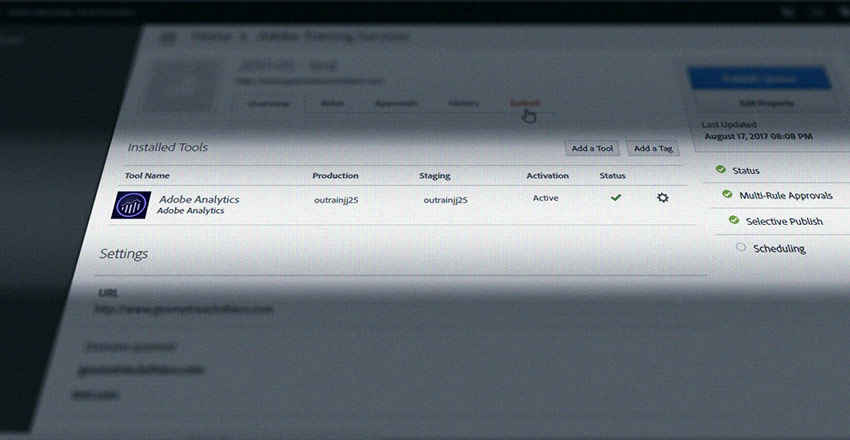
Adobe recently introduced Dynamic Tag Management, within the Adobe Marketing Cloud, as a comprehensive tag management solution. Since it is so young, there obviously are plenty of questions about what exactly it can or cannot do, what features have been incorporated in it, and how it can help marketers develop better digital measurement strategies. This article will attempt to answer all those questions and more. 1. What is Dynamic Tag Management? Dynamic Tag Management is the revolutionary solution introduced by Adobe, as part of its Adobe Marketing Cloud. It allows marketers to manage tags quicker and more easily, considerably facilitating the process of tagging web properties. It offers to companies the opportunity to thrive in the incredibly fast paced digital marketplace today. 2. What are the features offered by Dynamic Tag Management? Adobe has included a variety of user friendly features in Dynamic Tag Management that are highly beneficial to partners, customers, and prospects. They include a site-centric user interface instead of a tag-centric one, robust process and workflow management, unmatched rule driven data collection, built-in collaborative tools, and a lightweight meta-based library, in addition to the ability to manage multiple sites and to host anywhere.