

Good User Experience (UX) design has always been based upon how simple and easy to use the design is.
While those key features are still important to the overall flow of a websites design, in 2026, how brands make their users feel is becoming increasingly more important.
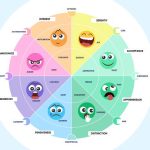
Emotion driven UX is an era of design that is focused on creating connections between users and brands, instead of simply providing easy to use interfaces.
We have seen this change coming at Slinky Web Design for the past few years.
We have conducted user tests, analysed click through data and scroll depth reports, and examined heat maps. All of these have found that while people use logic to justify their purchasing decisions, they base their decisions on emotions.
With that said, let’s how brands are winning both the hearts and wallets of consumers using design that appeals to how people feel.
The Psychology of Feel First Design
UX design once resided solely within the realms of spreadsheets and wire frames. Today, UX designers are also incorporating the study of human psychology and storytelling into their design processes. We are not speaking of a marketing gimmick, but rather a methodology that is grounded in how the human brain operates.
A research study by the Harvard Business Review clearly demonstrates that emotionally connected consumers are 25% to 100% more valuable when it comes to revenue and profitability.
This is due to the fact that emotion precedes reason in decision making.
In other words, neuroscientists refer to the process of affective primacy, whereby the emotional centres of the brain are activated prior to the rational centres of the brain. Therefore, even before reading a single line of copy on your website, your customers have already determined if they trust you.
It is this unspoken layer of design that effective UX designers are leveraging to create some of the most successful digital experiences available today.
Empathy: The Silent Superpower of User Experience
Empathy has quietly developed itself as one of the most important UX superpowers. While it was once enough to know what the user is doing, now designers need to know why the user is doing it.
Before the user lands on your home page, how does he/she feel? Is he/she hopeful? Anxious? Excited? Impatient?
You need to create a design that connects emotionally when you ask yourself that question.
Our UX process has expanded at Slinky beyond the standard persona and flow chart. At Slinky, we take advantage of emotional mapping, pinpointing the mental state of the user at each point of the interaction.
For example:
- If someone is fed up with the slow results from his existing agency, he will not react positively to a wall of text. Instead, he needs reassurance and evidence.
- If someone is enthusiastic about starting a new project, they will react better to dynamic visuals and motivating micro copy.
- If someone is worried about price or complexity, you can give them a sense of security and ease by making the way forward appear easy to follow.
By using emotion based UX, you treat your users like people and not numbers (data points). This is where you start building loyalty for your customers.
Colour, Motion, and Micro Moments – Three Ingredients For Emotional Design
Let’s face the truth. Most websites look very much alike. A grid layout, white space, a large header graphic, and a call to action button. We’re not saying the basic design is bad, but so many businesses have forgotten to include the emotional component that creates a long-lasting impression.
There are three design elements that we are working harder on at Slinky to incorporate to fill that gap:
1. Colour Psychology
Colour influences the mood and atmosphere of a website prior to the user reading a headline. Neutral soft colours provide a sense of calmness and self-confidence, while bright, vibrant colours provide a sense of urgency and energy. However, in 2026, colour trends are turning away from cold corporate colour schemes. We see warm colours, colours that feel human, grounded, tactile, and natural.
For starters, many fintech companies have been shifting from traditional corporate blues to warmer palettes. Reportedly, these changes have increased brand awareness and user interaction for these companies.
One high-profile example of this is Monzo’s switch to a hot coral debit card that not only made it more recognisable but also made it the talk of the town.
2. Emotion through Motion
Before, micro-animations felt like they were being primarily used to show off; today, they are mainly being used to express empathy toward users. For example, when you hover over a button or link on a website, a “gentle” reaction, such as a hover effect, can make the user feel as if the site is actively paying attention to them.
When the transitions from one page to another occur smoothly, the user experiences a flow in the interaction, versus experiencing friction.
Even when the motion used in the micro-animation is extremely subtle, the user will still perceive the action as if the site is showing some level of concern or care for their interactions with the site. The overall impression is that the site designers cared enough to provide the user with a positive experience while interacting with the site.
3. Humanised Micro-Copy
The majority of designers view UX writing as being the least influential aspect of creating an emotionally engaging user experience. These aspects are typically the very small amounts of text associated with buttons, tooltips, and form inputs. While these types of copy elements may appear to be minor components of the total user experience, they are still areas where the tone and personality of the website can become apparent.
For instance, instead of displaying “Submit”, the designer could use the phrase “Let’s Do This”. Additionally, instead of using “Error: Invalid Input”, the designer can utilise the phrase “Hmm, that doesn’t look quite right… Try Again?”
Using phrases like these adds a layer of personalisation to the user experience, which, although seemingly minor, creates a more human element to the user experience.
Emotion and Conversion: They’re Not Opposites
Marketers still misunderstand emotion-driven design: emotional design is not just for lifestyle brands!
There are many marketers out there today who believe that a design which elicits an emotional response from a user is soft or fluffy.
We’re here to tell you that emotional design can drive significant ROI for any business, no matter whether you are a creative agency or a large corporation.
Let’s examine some of the available research and statistics.
Harvard Business Review found that customers who are fully emotionally connected are on average, 52 % more valuable than those merely highly satisfied. In other words, while satisfaction is important, users will spend more money and come back to a company if they have developed an emotional attachment to it.
Emotional design impacts the following key metrics in UX design:
- Time Spent On Site – Users tend to linger longer at websites that provide an emotional experience as well as a functional one.
- Conversion Rates – When users perceive a website as being warm and clear, they develop trust in the site and are therefore more likely to click on it.
- Referral Potential – When users are emotionally attached to a site, they are more likely to refer others to it.
A good user experience interface should not just be about getting users from point A to point B, it should also inspire them to take the trip again.
Why 2026 Is A Tipping Point For UX Driven By Emotions
There were many factors that came together to turn 2026 into the breaking point for emotion-driven UX.
- AI Overload – With an influx of generative tools filling the web, there is no longer any uniqueness, and users are tired of seeing sites that appear to be created by machines. Authenticity is the key, and emotion is the answer.
- Digital Exhaustion After COVID-19 – For years, people have been bombarded with screens, and now they want to see experiences that feel human and less like the transactional nature of the internet.
- Accessibility Creates Connection – In the past, accessibility was simply about compliance. Now it is about creating a connection through empathy. When you create accessible experiences, you will naturally begin to create emotionally sensitive user experiences.
- Brand Differentiation – It’s hard to differentiate brands with logic – only emotions can. This is the last area of competition in digital design.
We’re not talking about a trend, this is a corrective measure. The digital world has been focused on efficiency rather than empathy for the last decade and in 2026, the digital world is trying to find a balance.
How Slinky Designs Emotions Into Each User Experience
While our process at Slinky is data-based, numbers alone cannot create an engaging user experience. Data can tell us what a user does, but only by using empathy will we understand why they did it.
Below are some examples of how we combine data-based research with empathy.
- Beyond The Metrics – During discovery, we conduct emotional insight sessions to figure out the moods and motivations of each target audience group.
- Creating Mood Boards Before Wireframes – Rather than creating wireframes based on grid systems, we create tone boards that visually represent how we want the experience to feel prior to opening Figma.
- Micro-Feedback Using Real Users – We test prototypes with real users, and we observe and listen to their physical reactions (smiles) and hesitation points.
- Writing Content That Evokes Emotional Intelligence – Our UX writers create content that is conversational and reassuring. We avoid jargon and fluff and focus on providing clear and warm messaging.
- Iterative Testing And Refining Motion Timing – We test and refine small aspects of our designs (motion timing, colour hue, word choice) that can greatly impact the way a user perceives the experience.
This is the essence of human-first digital marketing – it is measurable, but it is also meaningful.
The Emotional ROI
Emotions make money. Brands tend to ignore this.
Websites that build an emotional connection can increase user retention by 40% and customer lifetime value by 25%
Slinky has experienced these results with its clients in Australia – both service providers and e-commerce companies. The more comfortable, understood, and delighted you can make your customers, the more likely they are to act. This is not manipulating; this is creating great websites through good design.
Creating Emotionally Engaging Yet Functional Experiences
What is emotion-driven UX going to look like for businesses?
Your business’s website needs to be both functional and emotionally engaging. Each aspect of your website, each pixel, each animation, each piece of writing, communicates something to your visitors about your business.
If your business comes across as unapproachable, confusing, or disengaged from your audience, regardless of how effective your search engine optimisation (SEO) and social media advertising are, your website will receive the clicks but lose the connection.
Now, here’s the good news, it does not need to be complicated. Begin by making simple changes to your current processes:
- Assess your colour palette to identify its emotional impact.
- Revise your micro-copy to communicate empathy.
- Conduct research on how your users feel, not just their actions.
Each step you take to improve your users’ experiences builds trust, generates more engagement, and ultimately leads to greater conversions.
Create Websites That People Can Relate To
Regardless if it is a complete UX transformation, a conversion-oriented redesign, or an emotionally intelligent content strategy, Slinky Web Design combines data, design, and empathy to create an emotionally authentic experience.
People rarely remember what you communicated on your website. People rarely remember how your website was designed. People do remember how your website made them feel.
Ready to create a website where your customers feel connected to your business?
We can help you create a website that your customers love. Contact Slinky today.