
Keywords used to be the only thing that mattered for digital marketers. There was once a time where enough targeted keywords in the right places meant you’d inevitably rise through the ranks.
Nowadays, search engines are far too intelligent to play that game.
Google’s algorithms have evolved beyond simply reading the text on a page to truly comprehending it.
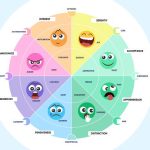
Comprehension, context, emotion and intent are all now contributing factors.
If keywords no longer drive rankings, what does? Let’s explore further.
The decline of keyword density
Strategies used to rely on a fixed percentage of target phrases within titles and headings. Now Google uses generative models to work out why someone is searching.
When someone searches for a plumber in Perth they do not just want a page repeating that exact phrase ten times. They want to see physical locations and verified customer reviews that prove the business is authentic and real.
Our team at Slinky Web Design have found that Google rewards these signals of usefulness.
The greater value your content can bring to users, the greater Google will value it.
We focus on how content feels to a human reader because the algorithm is mimicking that perspective.
User intent defines the new standard
Keywords have handed their crown over to intent. If your content does not satisfy what the user actually wants to achieve it will not rank.
We often see companies targeting high traffic terms that never actually convert into sales. This usually happens because the pages were written for a machine rather than a person.
While it’s important to make sure these AI machines can easily read your websites content, if its only made for machines, humans wont respond well to it.
Google rewards engagement signals like time spent on a page and low bounce rates. So if people are actually reading and engaging with your site, this shows Google its relevant and worth ranking.
Depth matters more than volume
Shallow content strategies are one of the main reasons most businesses fail to rank in 2026. Algorithms assess topical completeness to see if you have a deep understanding of a subject.
If we are writing about web design in Perth the search engine looks for associated topics like mobile responsiveness and accessibility. It creates a web of relevance that signals real expertise to the crawler.
Demonstrating your expertise in your industry is one of the most important and powerful things you can do for your SEO right now.
Proving your credibility through signals
Experience and trust are not elements you can simply add to a website. You must demonstrate them over time through author bios and case studies.
Google now checks your business information against third party reviews and mentions across the web. This means its important to maintain a consistent digital footprint.
Having your socials up and running, a google business profile, reviews, a website and google ads running. This wide range of strategies help Google know you’re a real business helping real customers.
Emotion as a ranking factor
AI models are becoming remarkably good at identifying the emotional tone of a website. Pages that connect with users on a human level tend to perform better in 2026.
When a visitor feels curiosity or excitement they spend more time interacting with your brand. These engagement signals tell Google the page is truly valuable to the public.
In our analysis of various campaigns we found that emotional hooks consistently outperform robotic text. High performing copy reads like it was written by someone who cares about the outcome.
Designing for content experience
How your content feels to consume is just as important as what the text says. Content experience is an indirect ranking factor because it measures user behaviour.
Layouts need to be scannable and easy to navigate. Images and your overall site in general must load immediately. Slow loading sites is one of the bigegts causes of bounce rates still.
Having a well-designed website is no longer a nice have. Technical SEO is part of the overall experience.
Balancing automation with craftsmanship
Google is becoming highly effective at identifying content that was generated entirely by machines. Purely AI text often lacks rhythm changes and emotional nuances.
The algorithm prefers unique and authentic human expression over perfect grammar. Even if you use AI for your research, it must always be fact checked and reworked by a human.
Just posting generated content spat out by a machine seems unethical and unauthentic. Your work must be original, yours and authentic.
The new role of backlinks
Backlinks are still essential but the focus has shifted entirely to quality. One link from a trusted and relevant resource outweighs a hundred irrelevant ones.
Unnatural linking patterns are easily spotted and can lead to penalties. We help our clients find digital connections through brand led outreach.
When your business is mentioned by other credible sources the system assumes you are trustworthy. It is about building a network of authority rather than just chasing numbers.
Key takeaways for 2026 rankings
- Prioritise user intent over specific keyword volume
- Create deep topical footprints instead of shallow pages
- Strengthen your trust signals through verified testimonials
- Write authentic content that connects emotionally
- Make sure that technical elements like schema are correctly implemented
Search ranking is no longer a simple challenge, but you can either stick with outdated keyword tactics or adopt a strategy based on long term credibility.
At Slinky Web Design we help brands grow across Australia by focusing on what search engines actually reward. Ranking is built on trust earned through every relevant click.
Is your current content strategy still chasing keywords or is it focused on building authority for the future?